
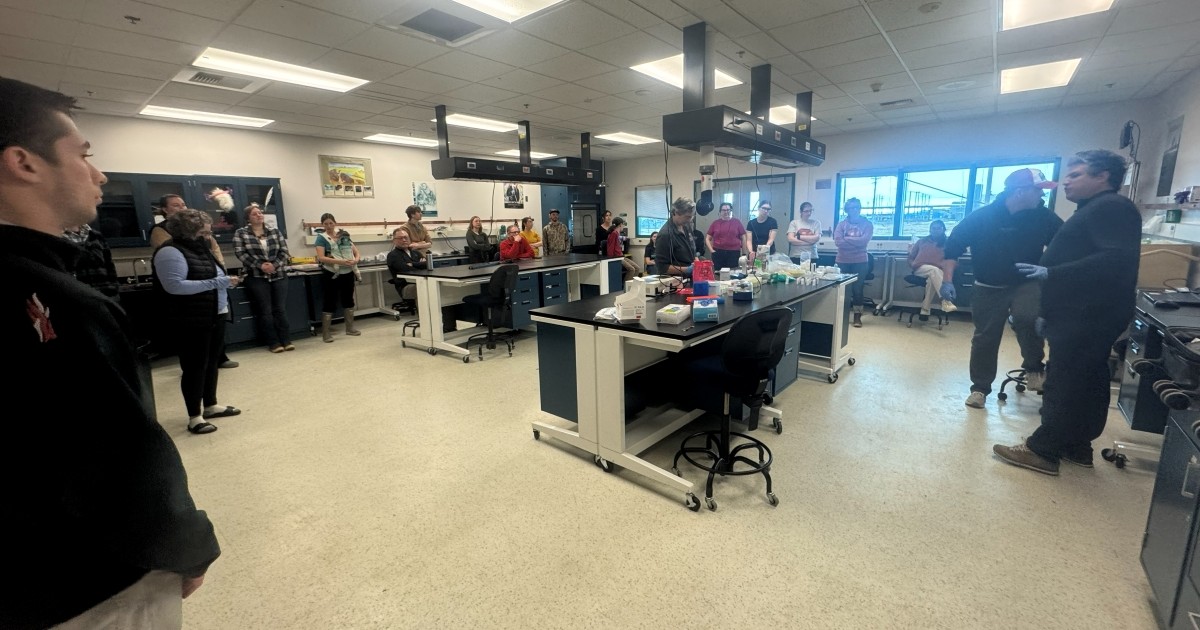
Environmental Surveillance Center for Assessing Pathogen Emergence (ESCAPE) personnel joined community members in Utqiaġvik, Alaska in July to begin building bridges to enable pathogen surveillance in remote locations. Dr. Berry and several other members from his lab joined fellow ESCAPE researchers from the Wildlife Conservation Society (WCS), who work closely with a number of different Alaskan communities, in Utqiaġvik to gather feedback from community members that could assist in the development of diagnostic devices to meet their pathogen surveillance needs. Part of the Center’s ethos is to develop diagnostic devices in collaboration with the communities that stand the most to benefit from their use. The communities are helping us to field test the tools so that the relationship between the Center and the community is mutually beneficial.
Why Utqiaġvik?
There were several considerations that made Utqiaġvik a prime destination for ESCAPE and its activities. Firstly, its importance as a point of convergence for several North American flyways, which are pathways that migratory birds use when migrating. This makes Utqiaġvik a prime destination for monitoring for avian influenza. There have been reports of avian flu detection in wildlife in the Arctic but have been found primarily through passive surveillance. Equipping local communities with rapid pathogen detection tools is an important step towards active surveillance, early detection, and improved decision making when it comes to zoonotic pathogens.
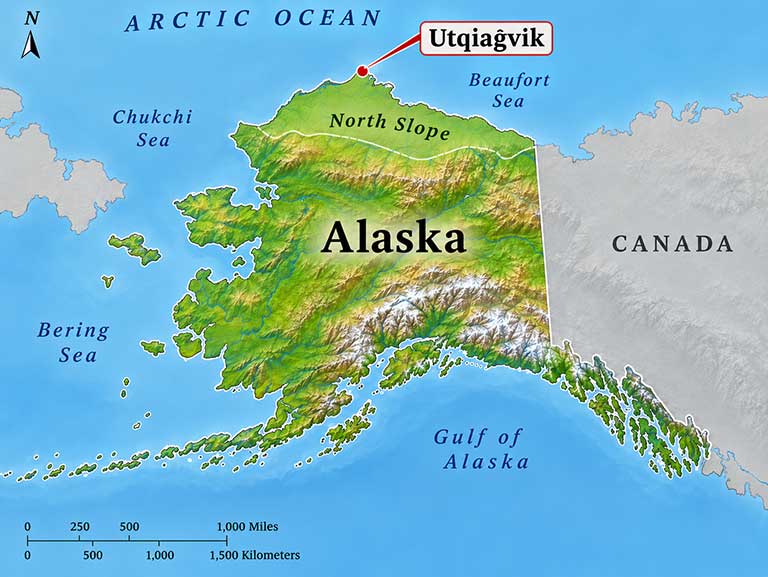
As the northernmost community in the United States, Utqiaġvik’s remote location and the logistical challenges associated with that remoteness were also a key consideration for ESCAPE activities. Enabling environmental surveillance everywhere means that our devices have to be easy to use and they have to overcome some of the key challenges associated with environmental surveillance. For example, a typical state-implemented wastewater surveillance network relies upon field locations shipping samples to a central laboratory for testing, resulting in potentially slow communication of results and decision making. Our goal is to empower communities to get answers in the field in a timely manner.
Speedy results are not the only critical component to successful pathogen surveillance. Trusted results are paramount to decision making in communities. As such, cultivating authentic relationships with community partners is essential. The Wildlife Conservation Society’s Arctic Beringia Program works with communities like Utqiaġvik to identify shared priorities at the intersection of human, wildlife, and ecosystem health. In the Arctic this means access to healthy, sustainable populations of wildlife for subsistence. When knowledge is co-produced in partnership with communities, contextual information valuable to interpretation of results adds power to the decision-making process in ways that are trusted, and mutually beneficial.
Outcomes from the Trip
The ESCAPE team was fortunate enough to be able to participate in a number of community events that built trust between researchers and community members. The researchers demonstrated techniques for testing environmental samples using the developing technology and discussed their vision for the future of environmental surveillance that Center researchers are working diligently to build. The researchers walked away with a greater understanding of community priorities, sensitivities, and desires regarding the surveillance of wildlife and human health in the Arctic, as well as logistical and capacity-related challenges they face. The ability to come together in-person to discuss the tools, opportunities, and risks showed the community the researchers value the knowledge held by locals and a desire to work collaboratively towards shared goals that could not have been achieved remotely.
You can read more about the trip on the University of Kentucky’s UKnow website.